
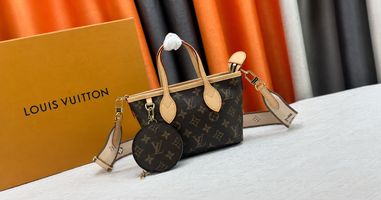
Best Louis Vuitton Shoulder Bag for Work,Travel,and Everyday Use
Pochette Métis is the strongest option for an organized workday.Diane suits relaxed daily clothing and a lighter load.Boulogne PM moves most naturally from daytime plans into dinner.Multi Pochette Accessoires offers the greatest flexibility when travel requires separate storage and more than one carrying setup.
The best louis vuitton shoulder bag is not necessarily the design with the largest interior or the most straps.It is the one that remains easy during the most demanding part of the day.A bag that feels convenient beside a wardrobe may behave differently during a crowded commute,airport transfer,long walk,or meal where space is limited.
Choose according to the moment most likely to expose a weakness.If stability matters most,begin there.If frequent access is essential,judge the opening first.When one bag must cross several settings,look for a design that becomes simpler rather than more complicated as the day continues.
1.Let the Hardest Part of the Day Decide
Most bags can handle a few belongings and a short walk.The differences appear when the wearer must move quickly,open the bag repeatedly,keep both hands free,or manage it beside outerwear and other luggage.
A workday may include a train,office,shopping stop,and dinner.A travel day can involve security checks,seated waiting,city walking,and storage inside a larger carry-on.These stages do not reward the same qualities.
Begin with the requirement that is hardest to replace:
• Stability during continuous movement
• Fast access without removing the bag
• Clear organization for several small belongings
• A controlled appearance across casual and polished settings
• A setup that can become lighter later in the day
A design does not need to lead in every category.It needs to work where inconvenience would be hardest to ignore.
2.Give Each Design a Clear Role
Diane has the most relaxed shape in this group.Its flap design works naturally with denim,knitwear,and clothing that does not need a sharply defined accessory.It is most convincing when the load has already been edited.
Boulogne PM follows a cleaner curved line.It remains compact against the body and can look casual or polished depending on the carrying setup.Its strength is the ability to cross different parts of a day without appearing out of place.
Pochette Métis gives each item a more deliberate position.The structured body and divided interior suit someone who prefers to know where an object is before opening the bag.It works best when those sections correspond to real habits.
Multi Pochette Accessoires treats storage as a flexible system rather than one fixed container.Its separate pieces can divide frequently used belongings from items that need less immediate access.That advantage depends on the wearer assigning a clear role to each section.
3.Commuting Rewards Stability
A commute exposes movement problems quickly.A bag that slides from the shoulder,swings into the arm,or requires one hand to hold it in place becomes tiring before the workday begins.
Pochette Métis offers stability through its defined body and longer carrying position.Its compartments also reduce the chance of everything shifting into one corner during a fast walk.The structure feels more deliberate against the body,but it remains predictable.
Multi Pochette Accessoires creates stability differently.The longer strap supports hands-free movement,and high-use belongings can remain in the easiest section to reach.The pieces may shift separately,however,especially when loaded unevenly.
A louis vuitton shoulder bag for commuting should remain manageable after the wearer sits down.A high position can press beneath the arm on a crowded train.A low position may strike the seat or hip.The bag should not require a complete strap adjustment whenever the wearer changes position.
Diane and Boulogne PM can suit shorter commutes when the load remains light.Boulogne PM stays closer to the body,while Diane provides a softer outline.
4.Work Use Depends on Organization Habits
The most professional-looking design is not always the most useful work bag.Organization should match the way belongings are actually handled.
Some people prefer fixed positions.The phone belongs in one section,a small notebook in another,and frequently used items remain near the opening.Pochette Métis supports this routine because its compartments create a repeatable order.
Others dislike internal boundaries.They want to place several belongings inside quickly and move them according to the day.Diane and Boulogne PM suit this more open approach,provided the load does not become too dense.
Multi Pochette Accessoires fits someone who prefers separate containers rather than traditional compartments.One piece can hold daily belongings,while another keeps items needed only during transit or a meeting.The advantage disappears when the wearer has to search through every section.
More divisions do not automatically create better organization.They save time only when each one has a stable purpose.
5.Day-to-Evening Use Needs Restraint
A bag moving from daytime plans into dinner does not need to become formal.It needs to avoid looking overloaded,technical,or visually busy once the rest of the outfit becomes simpler.
Boulogne PM handles this transition most directly.Its curved body remains controlled with casual clothing but does not depend on a relaxed setting.The carrying setup can change without altering the proportions of the bag.
Diane becomes more composed beside a structured jacket,clean trousers,or a simple dress.Reducing the contents also helps its flap and body return to a lighter line.
Pochette Métis keeps its structured,satchel-like presence.Multi Pochette Accessoires can work later in the day when part of the configuration is removed,but the complete layered setup may feel too active beside restrained clothing.
For a louis vuitton shoulder bag expected to cover both work and dinner,the useful test is whether it looks cleaner when the load is reduced.A design that still appears crowded may be too complex for that transition.
6.Travel Changes What Practical Means
Travel involves more than keeping both hands free.The bag may need to open during security checks,fit beside another piece of luggage,and become smaller after arrival.
Multi Pochette Accessoires has a clear advantage when separate storage will genuinely be used.One piece can hold frequently accessed belongings,while another carries items that remain untouched during most of the journey.Part of the setup can then be removed at the destination.
Pochette Métis provides a steadier alternative.Its defined sections prevent smaller belongings from collecting at the base,and the structured body remains easy to locate inside a larger bag.The tradeoff is that it does not compress as freely.
A louis vuitton shoulder bag for travel should also remain comfortable while seated.A bag that works during walking may feel awkward beside the body on a plane or train.Check whether it can move forward,rest on the lap,or sit nearby without the strap twisting.
Diane and Boulogne PM suit travelers who already carry a controlled load.Boulogne PM stays compact and adaptable.Diane works best when its interior is not treated as overflow storage.
7.One Main Bag Requires a Different Standard
Someone using one bag most days needs broad compatibility.A person with a rotation can choose a design for one precise role.
For frequent use,ask whether the bag can cover the two or three most common situations without major preparation.It should not require a complete rearrangement every morning or depend on one particular type of clothing.
Boulogne PM works well across several levels of formality.Pochette Métis suits a consistent routine built around fixed organization.Diane makes sense when the wardrobe and daily load already favor softness.Multi Pochette Accessoires is strongest when changing configurations is a genuine habit.
A rotation allows more specialization.The question is no longer whether one bag can solve every situation,but whether it adds a useful role that the existing options do not cover.
8.Change the Load With the Occasion
The same bag does not need to carry identical contents in every setting.A small change in the load can make one design useful across more of the week.
During a commute,keep high-use belongings near the opening and remove items carried only from habit.For travel,separate anything needed during security,boarding,or navigation.For dinner,reduce weight so the silhouette returns to a cleaner line.
One dense object placed at the side can pull the bag away from the body and concentrate pressure on the strap.Distributing the contents may improve comfort more than changing the carrying position.
These adjustments should remain quick.A bag becomes less practical when every transition requires complete repacking.
9.Four Common Mismatches
A larger bag still feels difficult to use.
The problem may be the opening or interior layout rather than total capacity.A wider object can block access even when unused space remains elsewhere.
An adjustable design stays in one configuration.
The feature exists,but it does not match the wearer’s routine.A simpler setup may have been enough.
A refined shape is filled to its limit every day.
The intended silhouette and actual load are working against each other.The bag may still close,but it no longer creates the appearance that influenced the choice.
A modular design creates more searching.
Separate sections help only when each one has a clear role.Without a repeated system,the wearer may open several pieces to find one item.
Comparing louis vuitton shoulder bag styles for different routines is more useful than choosing the model with the longest feature list.The correct design removes steps from the day instead of adding them.
10.Quick Decisions by Routine
Which design suits a structured workday?
Pochette Métis is the clearest choice when belongings already have fixed positions and the wearer values a predictable interior.
Which model moves most easily from daytime into evening?
Boulogne PM.Its rounded body remains controlled,and its character can change without requiring a different bag.
Which option offers the most flexible travel setup?
Multi Pochette Accessoires,provided the separate pieces and alternative configurations will actually be used.
Which design feels most natural with relaxed daily clothing?
Diane.Its softer shape works well with an edited load and less formal wardrobe proportions.
Which option suits someone who dislikes reorganizing?
Pochette Métis works when each item has a fixed section.Boulogne PM may feel easier for someone who prefers one main interior.
The most useful louis vuitton everyday shoulder bag is the one whose organization already resembles the way the wearer thinks.Adapting to an unfamiliar system will make even a capable design feel inconvenient.
11.Start With a Shape That Already Works
A scene-based comparison becomes useful only after the basic silhouette,opening,and carrying position have been narrowed.The bag should sit comfortably,accept the usual belongings,and open without being pulled into position.
A soft flap,rounded body,structured satchel shape,and modular arrangement interact differently with movement and clothing.The basic shape should therefore work before the design is assigned to commuting,work,travel,or everyday use.
A demanding schedule cannot correct an unsuitable foundation.If the bag blocks arm movement or the opening feels awkward during a simple test,additional features will not solve the problem.
12.Features Should Replace Effort
A second strap is useful when both carrying positions fit real parts of the week.Detachable pieces make sense when separating them improves access.Compartmentation helps when every section already has a purpose.
A feature that creates another adjustment,search,or component to store may add complexity instead.
Before favoring the longest list of functions,identify which ones would be used during an ordinary week.Versatility should be measured by fewer corrections,not more possible configurations.
13.Choose the Design That Stays Predictable
Test the final choices during the transition they are expected to handle most often.Notice whether the strap stays in place,common belongings remain reachable,and the silhouette still looks intentional after the setting changes.
The strongest option should not depend on repeated pulling,repacking,or removing pieces that were expected to make it more useful.
The right louis vuitton shoulder bag is not the model that claims the greatest flexibility.It is the one that behaves predictably during the parts of the day that matter most and requires the fewest corrections as the schedule changes.
Sophia Carter
Sophia Carter is a fashion writer focused on luxury accessories,designer handbags,and modern styling.She creates practical guides that help shoppers evaluate materials,understand design details,and choose pieces for different occasions.