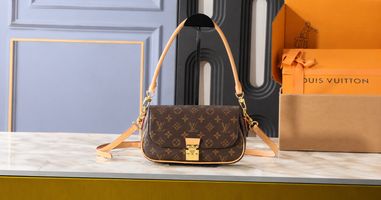


Which Louis Vuitton Bag Is Best for Hands-Free Everyday Use? Walking,Access,and Comfort
The best hands-free louis vuitton bag is usually one that stays stable while walking,keeps frequent essentials accessible without removal,and remains comfortable as the day gets longer.Crossbody designs often have the advantage,but strap pressure,bag depth,and correction frequency can change the result.
True hands-free use involves more than having a long strap.The stronger design should remain wearable through walking,phone access,sitting,standing,and carrying something else without repeatedly demanding attention.
1.Quick Answers About Hands-Free
Everyday UseWhich Louis Vuitton bag works best for hands-free everyday use?
Crossbody-friendly designs usually make the strongest starting point when walking,commuting,and keeping both hands available matter most.The final choice should still account for strap comfort,body stability,and everyday access.
Is crossbody better than shoulder carry for walking?
Usually for longer walking periods.Crossbody carry can reduce slipping and keep the bag more controlled,but excessive depth or poor positioning can still create swing and repeated adjustment.
What makes a bag comfortable for all-day wear?
Weight matters,but so do strap width,pressure concentration,bag depth,and how often the wearer needs to reposition it.
Should the bag stay close to the body?
Usually during walking and commuting,but positioning it too close can make the opening harder to reach.The better balance combines stability with usable access.
2.A Strap Does Not Automatically Create Hands-Free Ease
A long strap only proves that the bag can be worn across the body.
It does not show how well it performs once the wearer starts moving.
Hands-free louis vuitton bag use should remain practical while:
• Walking.
• Checking a phone.
• Carrying shopping bags.
• Sitting down.
• Standing again.
• Moving through crowded areas.
This is hands-free continuity long the bag can stay in use without being held,repositioned,or removed.
Fewer interruptions usually mean stronger everyday performance.
3.Crossbody Carry Has a Clear Advantage on Certain Days
Crossbody becomes especially useful when the day includes long walks,public transport,shopping,frequent phone use,or another bag carried at the same time.
These situations reward close-body positioning and keeping both hands available.
When those needs dominate,a louis vuitton everyday bag should stay wearable while the wearer is occupied with something else rather than simply offering another carry option.
The real difference is whether the bag continues working without repeatedly asking for attention.
4.Count How Often the Bag Needs Correction
Comfort becomes easier to judge when correction is measured rather than guessed.
Track how often the bag needs to be:
• Pulled forward.
• Pushed back.
• Straightened.
• Lifted away from the hip.
• Stopped from swinging.
• Repositioned before opening.
This is correction frequency.
A comfortable everyday bag should disappear from attention for long periods.If adjustments happen every few minutes,the hands-free advantage is weaker.
5.Depth Can Change Walking Comfort
Capacity and walking comfort do not always move in the same direction.
A deeper bag creates more interior room,but it can also sit farther from the body,increasing arm contact,swing,and the space needed while turning or moving through crowds.
A shallower louis vuitton crossbody bag can stay closer to the body,but reduced depth may leave less room as daily essentials change.
The better choice depends on how much space is genuinely used rather than maximum capacity.
https://www.loueio.com/products/louis-vuitton-crossbody-bags
6.Strap Pressure Increases as More Is Carried
Strap comfort should be judged with normal everyday contents inside.
Check:
• Strap width.
• Edge pressure.
• Hardware position.
• Adjuster placement.
• Whether the strap twists.
A narrower strap concentrates weight across a smaller area,while a broader strap can spread pressure more effectively.
Broader is not automatically better.A wide strap may sit awkwardly near the neck or interact differently with jackets.
The useful test is whether pressure fades from attention during extended wear.
7.Find the Hands-Free Threshold
A bag can remain technically wearable across the body after it stops feeling genuinely effortless.
This is the hands-free threshold.
Start with normal essentials,then add items that commonly appear through the day.
Notice when you begin to:
• Support the bottom with one hand.
• Pull the strap away from the shoulder.
• Stop the bag from swinging.
• Reposition it repeatedly.
That moment matters more than maximum capacity.
Beyond it,the bag may still fit everything,but the wearer has started helping it remain comfortable.
8.Access Should Not Require Removing the Bag
Repeated access is one of the clearest tests of hands-free performance.
The smoother sequence is:
move forward → open → retrieve → close → continue
The more disruptive sequence is:
remove → hold → open → retrieve → put back on
Across louis vuitton handbags,that difference becomes important when the phone,card holder,or keys are reached several times an hour.
This is access without removal.
The opening does not need to be the fastest.It needs to remain usable while the carrying system stays intact.
9.Sitting Should Not Reset the Entire Carry System
Walking comfort is only part of the day.
The bag may also need to work in:
• Cafés.
• Cars.
• Trains.
• Offices.
• Airports.
• Restaurants.
Watch what happens when you sit.Does the bag need to come off?Does it become trapped beside the hip?Does the strap need to shift?
Then stand again.
The adjustments between walking,sitting,and moving again create sit-to-stand friction.
A strong design keeps this transition simple.Walking and transit also reveal how differently crossbody styles behave through a full commute.
10.Carrying Another Bag Changes the Result
Many everyday situations involve more than one bag.
Examples include:
crossbody + work tote
crossbody + shopping bag
crossbody + carry-on
The smaller bag should remain accessible without competing with the second strap or forcing both bags into the same space.
This matters when one bag holds work or travel items and the smaller one carries frequently used essentials.
A louis vuitton bag that performs well by itself can feel quite different once another bag shares the body.
11.Small Does Not Automatically Mean Easier
Compact size often helps,but it is not enough.
A small design can still become irritating if it:
• Projects too far outward.
• Swings during walking.
• Concentrates strap pressure.
• Needs frequent repositioning.
• Becomes tightly packed during an ordinary day.
A slightly larger design may require less attention if it sits more predictably and keeps essentials easier to reach.
The useful comparison is size versus correction,not simply small versus large.
Compact crossbody designs can also differ sharply in how much effort repeated everyday access requires.
12.Commuting Exposes Different Weaknesses
Different commutes stress the bag in different ways.
Public transport
Close-body positioning and access without removal matter most.
Walking commute
Swing,strap pressure,and repeated body contact become easier to notice.
Driving
The important question is where the bag sits after entering the seat and how easily it returns to the usual carrying position.
When commuting takes up a large part of the week,the stronger louis vuitton bag for everyday use should pass through these transitions without requiring a new setup each time.
13.Crossbody Is Not Always the Better Answer
Hands-free movement does not automatically make crossbody the best format.
Another carrying style may work better when:
• Daily essentials require considerably more space.
• Walking periods are short.
• Underarm access matters more than stability while moving.
• A diagonal strap interferes with clothing.
• The bag is frequently taken off and put back on.
This is why the decision still begins with louis vuitton bag rather than treating crossbody as the automatic answer.
Crossbody wins only when its advantages match the repeated demands of the day.
14.Match the Choice to Four Hands-Free ProfilesLong-Walk Daily
Prioritize stability,strap comfort,and low correction frequency.
Transit Daily
Prioritize close-body positioning and access without removal.
Phone-Heavy Daily
Prioritize repeated retrieval without interrupting the day.
Two-Bag Daily
Prioritize a compact body that does not interfere with a tote,shopping bag,or other carried item.
These profiles usually reveal more than model popularity.
15.Choose the Bag That Interrupts the Day Least
The strongest hands-free louis vuitton bag should remain wearable through walking,access,sitting,and carrying other items with minimal correction.
Judge it by:
correction frequency → body stability → strap pressure → hands-free threshold → access without removal → sit-to-stand friction
Crossbody often becomes the stronger direction when these factors dominate the day,but the best result is not simply a bag with a long strap.
It is the one that lets the wearer continue through the day without repeatedly thinking about the bag.