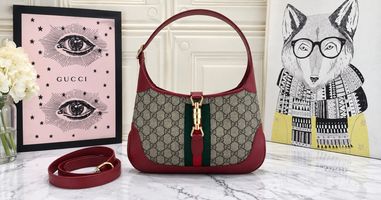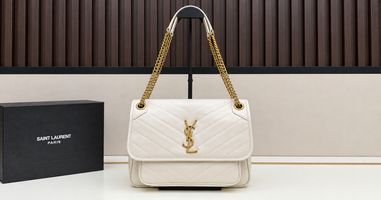
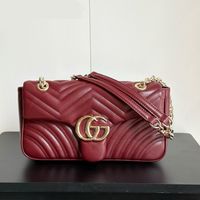
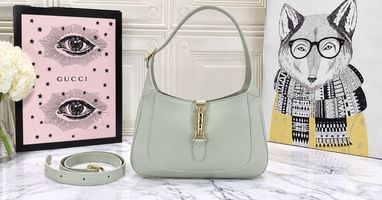
For lighter carry and a tighter profile, choosing Gucci Jackie 1961 mini tends to make more sense. Medium is better suited to someone who values easier interior access, more usable room, and a stronger presence on the shoulder. The difference goes beyond capacity because each size behaves differently once carried.
Mini concentrates the curved design into a smaller area, while Medium creates more space between the opening, base, and side panels. That changes not only what fits but also how the bag relates to the body.
The better size depends on how much room you need, where you prefer the bag to sit, and whether compact proportions or easier access matter more in regular use.
1. How the Piston Hardware Changes With Scale
The piston closure occupies a larger share of the front visually on Mini because the surrounding body is more compact. The hardware therefore feels closely tied to the bag’s identity.
Medium gives the same element more room. Its curved body, opening, and front panel create greater separation, so the closure sits within a broader composition.
Once both sizes are worn, Mini draws attention toward the closure more quickly, while Medium distributes visual weight across more of the outline. Scale changes how the same signature hardware reads before capacity even enters the decision.
2. Medium Creates More Space Around the Design
The distinction becomes clearer once the bag moves from a product image to the shoulder. A larger body changes how the lower curve, hardware, and side profile relate to one another.
For more presence without moving into a substantially larger format, Gucci Jackie 1961 medium offers a better balance between usable room and shoulder proportion.
The piston closure also feels less concentrated within the broader front area. Medium therefore works well when the Jackie design is meant to register clearly as part of the outfit rather than behave as a smaller accent.
3. Mini Keeps the Profile More Concentrated
Mini takes the opposite approach. The curved base and front hardware sit closer together, creating a tighter visual footprint.
That can work particularly well when the goal is to keep the bag controlled against the body. It also leaves more visual space around clothing with stronger proportions or layered elements.
The trade-off appears once the interior begins filling. Less distance between contents, opening, and side panels means organization matters sooner.
Mini works best when compactness is intentional rather than something accepted after the size has already been chosen.
4. The Smaller Interior Changes How the Opening Feels
The curved opening becomes more important as available room decreases. Contents placed near the center may fit comfortably while the upper edges begin to feel restricted sooner.
That effect deserves attention when considering Gucci Jackie 1961 mini bag for its cleaner exterior proportions. Enough space around the opening makes the smaller format easier to use.
Trying to fill every available area can make the interior feel more crowded than the exterior suggests. With a lighter load, however, the compact construction becomes an advantage because the body stays controlled without unnecessary volume.
5. Medium Leaves More Room Before Crowding Begins
Medium creates more breathing room before contents start pressing toward the upper curve. The interior can therefore feel less compressed during regular use.
The benefit is not simply that more fits. Additional room allows objects to settle without immediately interfering with access.
That difference is most useful when the bag carries a moderate load. If much of the extra space would stay empty, the larger body may add more presence than practical value.
6. Check the Exact Configuration After Choosing a Size Direction
Size should narrow the decision without finishing it. Strap arrangement, material, interior construction, and hardware can still change how a specific version performs.
Once those priorities are clear, narrowing the search to Gucci Jackie 1961 bag options becomes much easier because the comparison is focused on versions that already fit the preferred size direction.
Reviewing this bag configuration on the product page can then confirm the features that matter for the final choice instead of reopening the entire comparison.
Establish the right scale first; verify the exact product setup afterward.
7. The Same Shoulder Position Does Not Look Identical
Even when Mini and Medium sit at a similar height, they do not create the same relationship with the torso.
Mini leaves more open space around the bag because its curved base spans a smaller area. Medium occupies more of the side profile, so the same shoulder position can look fuller and more deliberate.
This difference is especially visible beneath the arm. Mini appears more tucked in, while Medium lets the Jackie curve extend farther across the torso.
The contrast comes from scale rather than wearer height alone, making side-by-side positioning more useful than a fixed height rule.
8. Mini Makes Sense When Compactness Is Intentional
A smaller size works best when keeping the profile restrained is one of the main goals.
For lighter routines, the compact proportions of Gucci Jackie 1961 mini keep the curved body close to the torso while preserving the piston hardware and recognizable outline. It works especially well when a larger shoulder bag would occupy more visual space than needed.
The trade-off is simple: a smaller exterior requires more selectivity about what goes inside.
9. Size Should Fit the Larger Jackie Decision
Mini and Medium should not be judged separately from material, closure preference, and strap setup. A size that initially looks right can become less suitable once those variables enter the decision.
Leather may make one format feel quieter, while GG canvas can increase the visual presence of the same dimensions. Strap position can shift that balance again.
Anyone still weighing those factors together can return to the broader Jackie selection context before narrowing the size further.
That keeps size from carrying too much of the decision in a design where several elements affect the final experience.
10. Medium Works Better When Access Matters More Than Minimal Scale
Compactness is not always the most useful priority. Regular carry can make easier access and less interior compression more important than keeping the exterior as small as possible.
When that balance shifts, stepping up to Gucci Jackie 1961 medium becomes easier to justify because the extra room supports organization as well as capacity.
Once the interior is used consistently, the benefit becomes clearer. Less precise packing is required, and the opening has more room to remain accessible.
Medium therefore makes more sense when greater tolerance in daily packing matters more than minimal scale.
11. Curved-Opening Space May Decide the Better Size
The most revealing size difference can appear near the top rather than at the base. Both formats use the same curved design logic, but Mini has less surrounding room before contents begin approaching the opening.
Medium leaves a larger buffer between what is carried and the upper curve. Opening, closing, and reaching inside can therefore feel less dependent on precise packing.
Mini remains effective when the interior load stays controlled.
Once contents regularly occupy most of the available space, however, the curved opening can become a more meaningful constraint than the external dimensions suggest.
For someone deciding between the two, the amount of free room desired around that opening may tell more than total capacity alone.
12. Choose the Size That Remains Easy to Use
The final decision should make sense before the bag is packed. Consider where you want it to sit, how much room you usually need, and whether a compact accent or stronger shoulder presence fits better.
Then think about several hours of use rather than an empty product image. Clothing, contents, and strap position can all alter the result.
Mini succeeds when maintaining a smaller footprint is central to the decision. Medium succeeds when extra room and easier access matter enough to justify its greater presence.