
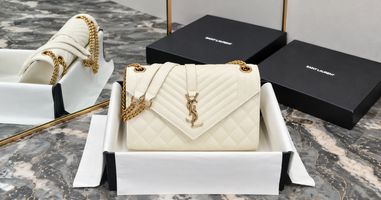
Is the YSL Envelope Bag Worth It?
YSL Envelope bag is worth considering when you want structured styling, chain carry, and enough versatility to move from daytime plans into dinner. It may be a weaker fit if you prefer softer construction, need more depth, or want something very light for long days. Value comes from how easily the design fits repeated use, not from appearance alone.
Before deciding, look at capacity, access, filled weight, and whether its structured flap actually suits what you carry.
1. What Makes It Easy to Keep Using
Envelope works best when daily belongings already suit a structured interior.
Its appeal comes from combining a defined outline with chain carry and a finish that can move between casual clothing and more polished settings. That versatility matters most when the same bag needs to stay appropriate from daytime into evening.
Regular use becomes easier when contents stay relatively flat and organized. If one thick object constantly changes how everything sits, structure starts working against convenience.
That distinction matters more than how versatile the bag appears while empty.
2. Where the Design Starts to Compromise
Structured construction creates both visual appeal and practical limits.
A firm flap keeps the outline controlled, but usable room can disappear quickly once thicker pieces occupy depth.
Structured construction is central to YSL Envelope bag, so bulky belongings can reduce practical space faster than exterior dimensions suggest.
Chain carry introduces another tradeoff. More room encourages more packing, yet additional contents increase filled weight.
Someone who mainly carries slim essentials may barely notice these limits. Rounded cases, larger pouches, or several thick items can expose them much sooner.
Those compromises matter far more when they appear every time the bag is carried rather than only occasionally.
3. Does Capacity Match Real Daily Use?
Capacity should solve normal needs without encouraging unnecessary packing.
Small makes sense when regular contents remain light and compact scale improves the experience. Medium becomes more useful when extra width prevents repeated rearranging or makes longer days easier.
Neither size solves every capacity problem.
More width cannot compensate for an object that simply needs greater depth.
Practical fit matters more than choosing whichever version appears more spacious.
4. How It Feels Across a Full Day
Short wear can hide issues that become noticeable several hours later.
Chain position, filled weight, outerwear, and how frequently you open the bag all affect comfort. A polished evening profile can feel less appealing if constant repositioning becomes necessary during a long daytime schedule.
Regular users are more likely to appreciate Envelope when:
• Contents stay relatively controlled
• Opening remains easy after packing
• Chain weight stays manageable
• Daytime plans can continue into evening without changing bags
Comparing available versions of YSL Envelope can make it easier to judge whether its configuration suits your usual day.
5. Small, Medium, Clutch, or Chain Wallet?
Each version answers a different need.
Small favors compact carrying and
occasions where lighter scale remains useful.
Medium allows more flexibility when one bag needs to cover several parts of the day.
Clutch format suits occasions where hand carry is intentional rather than inconvenient.
Cassandre chain wallet moves further toward card organization and slim essentials, making spare capacity less important than hands-free movement.
The decision should begin with the compromise you are least willing to accept. Anyone who dislikes hand carry should not choose Clutch simply because its scale looks refined. Regular need for more space is also a sign that Small may be taking on the wrong role.
6. When Softer Construction Makes More Sense
Envelope is not automatically the better YSL choice.
A softer bag may suit changing daily contents more easily, especially when thicker objects need more forgiving space. Flexible construction can adapt around irregular pieces instead of asking everything to sit within a fixed outline.
Envelope makes stronger sense when structure itself is part of what you want.
That includes a preference for a crisp flap, predictable opening, and a silhouette that stays visually controlled after several hours of use.
If flexibility matters more than definition, another construction may remove more everyday friction.
7. Does It Work as a First Bag?
It can, particularly when one purchase needs to cover more than a single occasion.
As a first YSL Envelope bag, one of its strongest advantages is the ability to move between daytime plans and more polished evening settings.
That range can cover work-related appointments, weekend use, city outings, and dinner without requiring a different bag.
Still, a first purchase should not automatically mean choosing whichever version appears most versatile.
If most days involve very few items, smaller scale may see more use. If work requires noticeably more space or thicker belongings, Envelope may not be the strongest single-bag solution.
A first purchase should solve the routine you already have rather than an imagined future schedule.
8. Who Is Most Likely to Keep Reaching for It?
Envelope tends to stay useful when belongings and schedules are fairly predictable.
It is especially convincing when:
• Daily contents remain moderate
• Structure is preferred over softness
• Hands-free chain carry matters
• Evening use is frequent enough to value a polished profile
• Changing bags between daytime and dinner feels inconvenient
Usage can fall when capacity is constantly being tested or chain weight becomes something you notice before leaving home.
Frequent use says more about value than the number of theoretical occasions the bag could cover.
9. When Another Version May Be the Better Buy
There are clear situations where choosing something else is more sensible.
Small may be better when compact scale matters more than reserve room.
Clutch can suit deliberate hand-held occasions.
Cassandre chain wallet works better when card organization and slim crossbody use dominate.
A softer shoulder bag may be preferable when contents vary or greater flexibility matters more than a defined outline.
If you are still deciding among sizes and formats, the complete Envelope selection guide can help place those differences in a wider context.
10. When It May Not Be the Right Bag
Envelope is less compelling when daily use requires compromises every time it is carried.
Think twice if:
• Thick belongings regularly fight the structured interior
• Filled chain weight discourages longer wear
• Much more depth is needed
• A softer body would suit your contents better
• Evening styling matters very little
For routines that suit structured carry, moderate capacity, and day-to-evening use, Envelope can earn frequent rotation rather than becoming an occasional piece.
If regular use means constantly working around its construction, a softer or roomier construction will probably fit that routine better.
Sophia Carter
Sophia Carter is a fashion writer focused on luxury accessories,designer handbags,and modern styling.She creates practical guides that help shoppers evaluate materials,understand design details,and choose pieces for different occasions.