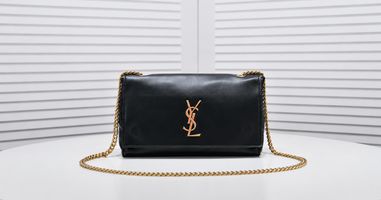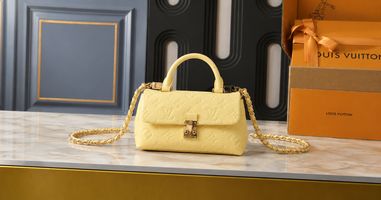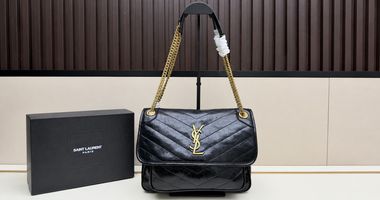
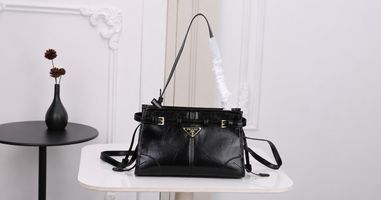
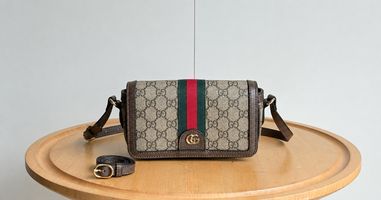
Effective gucci shoulder bag care depends on the surface,construction,and frequency of use.Smooth leather needs protection from repeated friction,quilted designs need relief from long-term pressure,and canvas styles require attention around the corners,trim,and attachment areas.Storage should support the body lightly without stretching its shape or leaving hardware pressed against the surface.
The aim is not to prevent every sign of use.A practical routine reduces avoidable wear while allowing the bag to remain part of workdays,weekend plans,dinners,and travel.Controlling repeated contact,moisture,weight,and poor storage is usually more useful than intensive cleaning.
1.Start With Surface and Construction
A care routine should begin with the way the bag is made.Smooth leather,textured leather,quilted surfaces,and coated canvas do not respond to contact in the same way.A method that is harmless on one area may change the finish of another.
Structure matters too.A soft bag needs enough interior support to prevent collapse,but too much filling can stretch the seams and flatten natural folds.A rigid design keeps its outline more easily,though pressure around the corners,flap,and opening may become more visible.
The strap also changes what requires attention.A chain can press against leather during storage.A slim leather strap bends repeatedly near adjustment holes.A woven strap receives friction across a broader area and may collect dust where it meets the hardware.
Use frequency should guide the routine.A bag carried several times each week needs regular checks around contact areas.An occasional design may need less surface attention,but its storage position becomes more important because pressure can remain unnoticed for longer.
2.Smooth Leather Needs Friction Control
Smooth leather often changes through repeated contact rather than one dramatic incident.Fingernails,jewelry,rough fabric,and hard surfaces can create fine marks when they touch the same area again and again.
The bottom corners and outer edges deserve attention because they regularly meet chairs,tables,and clothing.Lifting the bag instead of sliding it across a surface may do more to preserve these areas than repeated polishing.
Loose dust can be removed with a clean,soft cloth using light movements.Strong pressure or repeated rubbing may change the sheen of one section and make it look different from the surrounding surface.
Any product should first be tested on a small,less visible area.The purpose of gucci leather shoulder bag care is not to make the surface look newly manufactured after every use.It is to avoid making a minor mark more noticeable through aggressive treatment.
Hand products can also affect areas that are touched regularly.Allow lotion or other products to absorb before repeatedly handling the strap,flap,or closure.
3.Textured Leather Is Forgiving,Not Maintenance-Free
Textured leather can disguise fine scratches more effectively than a smooth finish,but it still receives wear around the corners,opening,and strap attachments.
Dust may settle between raised sections or along stitching.A soft,dry cloth can remove loose particles without pressing them farther into the texture.A small clean brush may help around seams when used gently,but the surface should not be scrubbed.
Repeated hand contact can create a different sheen around closures and strap areas.This change develops gradually and may become more visible when one section is handled more often than the rest.
Corners can also flatten through regular use.The texture may remain clear across the main panels while high-contact areas become smoother.Overfilling increases outward pressure and may speed up this change.
Textured leather is often suitable for regular use because minor wear is less immediately visible.That advantage should not be confused with complete resistance to contact.
4.How to Protect Quilted Surfaces
Quilted leather has a different priority.The main concern is not always dirt or surface marks.Long-term pressure can reduce the depth of the raised sections and make one area look flatter than another.
Do not store heavy belongings on top of the bag.Chains,clasps,and detachable straps should not remain pressed across quilted panels for extended periods.A light wrap around exposed metal can reduce direct contact without creating unnecessary bulk.
Interior support should hold the body in its normal shape.It should not push the quilting outward or place tension along the stitching.Soft,clean material works better than rigid objects with hard edges.
Dust can gather where the quilting meets stitched lines.Use light movements that follow the surface instead of pressing into each channel.Aggressive cleaning may affect both the leather finish and the thread.
Pressure management is central to caring for quilted leather.These surfaces often benefit more from careful placement and storage than from repeated treatment.
5.Canvas Care Includes Trim and Corners
A canvas body may tolerate regular use well,but its most vulnerable section may not be the canvas itself.Leather trim,painted edges,corners,and attachment areas often receive more concentrated contact.
Lower corners touch clothing,seats,and nearby surfaces throughout the day.Top edges move whenever the opening is used.Strap attachments carry weight while also bending and pulling against the body.
Clean canvas with light surface movements rather than strong rubbing.A printed or coated finish can change when one section receives more friction than the rest.
Moisture near seams and trim needs time to dry naturally.Do not close the bag immediately while an area still feels damp.Good airflow is more appropriate than direct heat,which may affect the material or distort the shape.
Canvas may appear easy to maintain,but mixed construction requires attention to each component.The body,trim,edge finish,and hardware should not be treated as though they were one identical surface.
6.Hardware Can Affect the Area Around It
Metal details develop normal surface changes through handling,but their effect on nearby leather can be more important than the appearance of the metal itself.
A chain resting across the front may leave impressions.A heavy closure can pull a flap forward when the bag is empty.A clasp that swings during movement may repeatedly touch the same edge.
During storage,place chains and detachable parts where they can rest without pressing against the main panels.Do not pull a chain tightly around the body or force a clasp into a position that changes the natural shape.
Carrying habits also affect how quickly straps,edges,and hardware receive contact.Shoppers choosing between different gucci shoulder bags should consider where each design rests against the body and how often metal details touch the surface.
Hardware should be handled gently rather than polished repeatedly.Aggressive rubbing can change its finish and transfer pressure to the surrounding material.
7.Match the Cleaning Method to the Mark
Different marks require different responses.A single aggressive method should not be applied to every surface problem.
Surface Dust
Loose dust can usually be removed with a clean,soft,dry cloth.Use light movements and avoid rubbing one section repeatedly.
Light Color Transfer
Stop further contact with the clothing or surface that may be causing the transfer.Do not immediately spread a cleaning product across the entire panel.A small affected area can become larger when rubbed without control.
Moisture
Blot surface moisture gently and allow the bag to dry in a ventilated area.Keep it away from direct heat and do not reshape it forcefully while the material is damp.
Cosmetic Marks
Avoid alcohol,strong solvents,and untested household cleaners.These may change the finish more noticeably than the original mark.
When the correct treatment is uncertain,doing less is often safer than repeated experimentation.A faint mark can become more visible when cleaning changes the color or sheen around it.
8.Color Transfer Is Mainly a Contact Problem
Color transfer is often associated with light leather and dark clothing,but shade is only one part of the issue.Repeated movement,pressure,and carrying position determine how much contact occurs.
A bag worn near the hip may rub against denim or a dark coat with every step.The same bag held closer under the arm may touch a smaller area but receive concentrated friction along one edge.
Warm weather and moisture can increase the effect because damp fabric may release color more easily.A full day of movement creates a different risk from a brief period of contact.
Prevention is more reliable than trying to remove widespread transfer later.Consider the clothing worn most often,especially when choosing a pale or lightly finished surface for regular use.
For practical gucci shoulder bag maintenance,reducing repeated contact with dark or unstable fabrics is usually more effective than attempting intensive cleaning afterward.Color transfer is often caused by movement and pressure at one contact area rather than by shade alone.
9.The Strap and Attachments Need Separate Attention
The strap receives a different type of wear from the body.It bends,twists,and carries concentrated weight while remaining in contact with clothing and the shoulder.
A thin strap can place more pressure on a small section,especially when the bag is full.Wider straps distribute weight more evenly but may receive friction across a larger surface.
Adjustment holes and connection areas bend whenever the length changes.Leaving the strap twisted can place unnecessary stress on these sections.Allow it to return to a natural position after use.
Detachable straps should not be folded tightly for storage.A loose curve reduces repeated creasing.Leather woven through a chain also needs room because the metal and leather move against each other during carrying.
Strap care should include the attachment areas rather than focusing only on the front and back panels.A well-kept body can still become difficult to use when the strap connection is repeatedly pulled out of alignment.
10.Store the Bag Without Distorting It
The purpose of interior support is to prevent collapse,not to force the bag into a fuller shape.A soft body may need light filling,but the material should still follow its natural outline.
Avoid rigid objects that press against the corners,flap,zipper,or seams.Interior support should be clean,soft,and distributed rather than concentrated in one area.
A structured bag usually requires less filling.Too much pressure can push the side panels outward or place tension along the opening.The bag should close naturally without resistance.
Straps need a relaxed position.A leather strap should not be sharply folded,and a chain should not remain pressed against the surface.Wrap exposed metal lightly and place it inside only when doing so does not stretch the interior.
Leave enough room between stored bags.Direct contact can transfer pressure from one body to another.The storage area should also avoid prolonged heat,moisture,and strong light.
11.Match the Routine to Use Frequency
A bag used several times each week needs a different routine from one carried only for occasional dinners or seasonal events.
Frequent Use
• Remove loose surface dust before it builds around seams and edges.
• Check the areas that repeatedly touch clothing or the body.
• Remove unnecessary contents so the structure is not under constant pressure.
• Let the strap and body return to a natural position after carrying.
Occasional Use
• Confirm that the surface is dry before storage.
• Support the body lightly without stretching it.
• Keep chains and clasps from pressing against leather.
• Check the storage position periodically for collapse or trapped moisture.
Rotation of Several Bags
• Clean according to actual contact rather than following a fixed schedule.
• Give each design enough room instead of stacking bags tightly.
• Inspect bags that have not been carried recently because storage pressure may develop gradually.
Frequent use does not always require intensive care,and occasional use does not guarantee that a bag remains unchanged.Storage and contact patterns matter as much as the number of times it is carried.
12.Common Care Mistakes
Many avoidable problems come from doing too much or storing the bag in the wrong position.
• Using the same product on every surface.
• Repeatedly rubbing a light mark in an attempt to remove it completely.
• Leaving a chain or clasp pressed against leather.
• Storing a soft bag completely empty until it collapses.
• Filling the body too firmly in an attempt to preserve its shape.
• Closing the bag in storage while part of it is still damp.
• Caring for the body while ignoring the strap,corners,and attachments.
• Treating every normal sign of use as a problem that requires strong cleaning.
• Carrying unnecessary weight that places continuous pressure on the strap and base.
A restrained response is usually more useful than repeated treatment.The goal is to prevent avoidable damage without creating a larger change in the process.
13.A Practical Care Routine
A simple routine is easier to maintain than a complicated sequence used only once.
1.Identify the surface and construction.
2.Check the sections that received the most contact.
3.Remove loose dust with light movements.
4.Allow any moisture to dry naturally.
5.Empty contents that are not needed for the next use.
6.Support the body lightly without stretching it.
7.Place straps and hardware where they cannot press against the surface.
8.Store the bag upright or in its natural resting position with space around it.
This process does not require cleaning after every outing.The routine should respond to what actually happened during use.
14.What Preserves Long-Term Use?
A practical gucci shoulder bag care guide should focus less on frequent cleaning and more on controlling repeated friction,long-term pressure,moisture,and unnecessary weight.Smooth leather,quilted surfaces,canvas,hardware,and straps each respond to different forms of contact.
Normal changes from regular use do not automatically mean the bag has been poorly maintained.A useful routine should reduce avoidable wear without making the design difficult to carry or enjoy.
The strongest habits are simple marks cautiously,keep hardware from pressing against the surface,allow moisture to dry naturally,and support the body without forcing its shape.Regular attention to these details matters more than intensive treatment performed only after a problem becomes visible.